


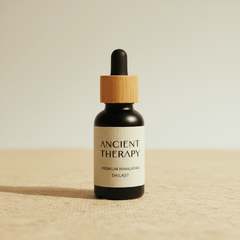



Fulvic Acid Guide • Pure • Lab-tested • Certified Organic
Short version:
- Fulvic acid is the small, active fraction of the humic family — naturally formed as plants and minerals break down over centuries.
- It binds and carries minerals, keeping them soluble across the digestive pH range.
- In Himalayan Shilajit, fulvic acid appears with 80+ trace minerals and plant-derived compounds. Together they form a natural “fulvic mineral complex”.
- This guide explains what fulvic acid is, how it works, how it differs from humic acid, safety, and how to use it (practically and non-prescriptively).
Reading time ~6 minutes
Fulvic Acid in Shilajit — What It Is and Why It Matters
Fulvic acid has become a key term in modern wellness — but in reality, it is an ancient, naturally occurring compound. It forms when plants, microbes and minerals interact over long geological cycles.
What makes fulvic acid special is its ability to bind (chelate) minerals, keep them dissolved, and help them stay available as they move through the digestive tract. This is why it is often described as a natural “mineral carrier”.
When found in Himalayan Shilajit, fulvic acid is part of a full-spectrum nutrient matrix together with trace minerals, humic substances and aromatic compounds. For the full context, see our main pillar: What is Shilajit?
What Is Fulvic Acid? (Simple definition)
Fulvic acid is a group of very small, water-soluble organic molecules created as plant matter breaks down in soil and rock. Unlike larger humic acids, fulvic acid remains soluble across the entire pH range — from acidic (stomach) to alkaline (intestine).
Because fulvic acid carries multiple negatively charged groups, it can bind minerals such as magnesium, iron, zinc and copper. This is why it’s used in natural mineral complexes like Shilajit.
Core insight: Fulvic acid is nature’s mineral “carrier” — small, soluble and reactive.
Fulvic Acid in Shilajit — The Natural Mineral System
Shilajit naturally contains a balanced complex of fulvic acid + minerals + humic fractions. Together, these create a nutrient system that feels smoother and more stable compared to isolated ingredients.
- Mineral complexing: fulvic acid binds trace minerals and keeps them dissolved.
- pH stability: remains soluble as it moves through the digestive tract.
- Aromatic compounds: Shilajit contains plant-derived DBPs (dibenzo-α-pyrones) that support antioxidant balance in test models.
This is why many people choose Shilajit Drops instead of isolated fulvic acid — you get the full-spectrum system as nature intended.
Visual Overview: Fulvic Acid Inside the Shilajit Matrix

Fulvic Acid Benefits — What It Actually Does
Below are mechanism-based insights from research. These describe how fulvic acid behaves chemically and nutritionally — not medical claims.
1) Mineral Transport & Bioavailability
Fulvic acid can bind minerals and keep them soluble, supporting smooth nutrient handling. This is why fulvic + trace minerals naturally appear together in Shilajit.
2) Redox & Antioxidant Buffering
Phenolic and quinone groups help buffer oxidative reactions in chemical models — often associated with reports of balanced, steady energy.
3) Gut Interface Interactions
Being small and water-soluble, fulvic molecules can interact with micronutrients at the gut interface — a plausible basis for many reported effects.
Many people describe the fulvic–mineral complex in Shilajit as contributing to a steadier, more “present” feeling in daily life. While not a medical effect, this sense of grounded energy is why some choose to include Shilajit in morning or evening rituals. For more on natural presence and connection, see Shilajit & Intimacy.
Core insight: Fulvic acid supports nutrient handling rather than acting like a stimulant.
Fulvic vs Humic Acid — What’s the Difference?
- Molecular size: Fulvic is small; humic is much larger.
- Solubility: Fulvic stays soluble at all pH levels; humic does not.
- Use: Fulvic is used in mineral complexes; humic is more soil-oriented.
Fulvic acid vs Shilajit: Fulvic acid is a component; Shilajit is the whole resin. For full-spectrum benefits, most choose the natural matrix in Shilajit Drops.
Quality, Sourcing & Lab Testing
- Origin: Himalayan Shilajit collected in controlled areas.
- Testing: third-party labs (Eurofins) screen for purity, microbes and heavy metals.
- Certifications: Certified Organic • Small batches • COA available.
- Consistency: Standardised drops for precise dosing.
Is Fulvic Acid Safe?
High-quality, lab-tested fulvic acid sources such as Shilajit are generally well tolerated. The main risk is contamination from poorly processed products — not the compound itself.
- Common tolerance: Most tolerate low daily servings well.
- Medication spacing: Keep fulvic acid a few hours away from prescription meds.
- Avoid if: you have known hypersensitivities or are advised against mineral complexes.
How to Use Fulvic Acid (via Shilajit Drops)
- Start low: 4–6 drops once daily.
- Typical: 6–10 drops/day.
- Upper practical range: ~20 drops split across the day.
Mix in warm water, tea, or coffee. Space 2–3 hours from medications and megadose minerals.
FAQ — Fulvic Acid & Shilajit
What is fulvic acid used for?
A natural way to deliver trace minerals in a soluble, balanced form.
Is fulvic acid the same as Shilajit?
No — fulvic acid is one component of Shilajit’s full-spectrum matrix.
Does fulvic acid detox the body?
It can bind metals in solution, but this is not a medical detox protocol.
Related Articles
Pure • Lab-tested • Certified Organic. Rooted in tradition, proven by science.
Explore our Energy Collection or start with Shilajit Drops.
Science & references
Shilajit is a natural complex rather than a single isolated molecule, so most evidence comes from mechanistic studies, safety evaluations and a few human trials. Key open-access papers include:
- Fulvic acid – therapeutic potential (review). Overview of fulvic acid chemistry, redox activity and proposed biological roles (PMC6151376).
- Shilajit – composition & clinical evidence (review). Summarises traditional use, mineral content and early human data on performance and recovery (PMC3296184).
- Humic & fulvic acids – toxicological safety evaluation. Modern review focused on safety, contaminants and dose considerations (PMC7505752).
- Shilajit supplementation & fatigue-resistant strength (8-week trial). Human study exploring mitochondrial support, exercise performance and perceived fatigue (PMC6364418).
This list is not exhaustive, but highlights core open-access sources we use when formulating and communicating about Shilajit. Natural products vary; always combine research with your own experience and professional guidance.
Quality owner: Ancient Therapy Quality Team — small-batch, traceable, COA-backed. Contact: info@ancienttherapy.com
Editorial note: Informational only. Not medical advice.
Leave a comment