


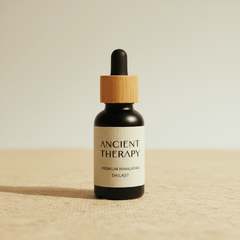



How Shilajit Works • Natural Mechanism Guide • Pure • Lab-tested
Short version:
- Shilajit works through its natural complex of fulvic acid + trace minerals + plant-derived compounds.
- Fulvic acid keeps minerals water-soluble across all pH ranges, supporting the body’s nutrient handling.
- Shilajit interacts with the body’s natural energy production via mitochondrial processes.
- It behaves as an adaptogenic support system in traditional use, helping the body stay balanced.
- All effects depend on purity — lab testing and clean sourcing are essential.
Reading time ~5 minutes
How Shilajit Works in the Body (a simple, science-rooted explanation)
Shilajit has been used for centuries in Ayurvedic tradition — but how does it actually work inside the body? This guide breaks down the mechanisms in a clear, grounded and non-medical way.
Shilajit is a natural nutrient complex formed when plant matter and minerals break down over long periods in mountain environments. This slow process creates a concentrated matrix rich in fulvic acid, humic fractions and over 80 trace minerals.
For a full beginner’s overview, see What is Shilajit?.

Core insight: Shilajit doesn’t act like a stimulant — it works as a natural nutrient system the body can use gradually.
1. Shilajit & nutrient absorption — how it actually works
The key driver behind Shilajit’s function is fulvic acid, a small, water-soluble compound capable of binding minerals and keeping them dissolved throughout digestion.
- Mineral complexing: Fulvic acid binds minerals like magnesium, iron, zinc and copper.
- pH-stable solubility: These complexes remain soluble from stomach to intestine.
- Gut interface: This helps minerals interact evenly with the gut’s nutrient-handling systems.
It does not “supercharge absorption” — it simply supports a smoother nutrient flow.
Core insight: Fulvic acid acts like a gentle “mineral carrier”, not a supplement booster.
For a deeper dive, visit Shilajit & Fulvic Acid.
2. Shilajit & energy — the mitochondrial connection
Many people associate Shilajit with steady, stable energy. This comes from how it interacts with the body’s mitochondria.
- Shilajit contains natural plant-derived DBPs (dibenzo-α-pyrones).
- These compounds support the body’s own energy-handling processes.
- Fulvic acid helps maintain mineral flow around mitochondrial pathways.
This supports the natural production of ATP — the body’s energy currency. The result is not a caffeine-like spike, but a smoother baseline energy.
Core insight: Shilajit supports the body’s natural energy pathways — it doesn’t stimulate them artificially.
3. Shilajit & stress balance (adaptogenic role)
In Ayurvedic tradition, Shilajit is considered an adaptogenic substance — meaning it supports the body’s ability to maintain balance under everyday stress.
Its combination of minerals, fulvic acid and natural plant fractions creates a mild, grounding nutrient flow many people find stabilizing.
For more on adaptogens, see Adaptogens & Stress.
For a deeper look at how energy and presence relate to stress balance, explore: Shilajit & Intimacy.4. Recovery, balance & everyday resilience
Many use Shilajit for daily rituals around focus, recovery or calm — because of its natural nutrient matrix:
- Mineral balance: contributes to the body’s natural repair processes.
- Redox buffering: fulvic acid participates in mild electron-transfer reactions in chemical models.
- Traditional use: long-standing Ayurvedic use for vitality and balance.
Core insight: Consistency matters — Shilajit supports long-term balance, not quick fixes.
How to use Shilajit (morning, training, evening)
- Morning: 4–6 drops in warm water for a grounded start.
- Pre-workout: 5–7 drops about 20 minutes before training.
- Evening: 3–5 drops in herbal tea after dinner.
For comparing forms, see Shilajit Drops vs Resin vs Capsules.
Related articles
Pure • Lab-tested • Certified Organic. A clean, natural daily energy ritual.
Explore our Energy Collection or start directly with Shilajit Drops.
Science & references
Shilajit is a natural complex rather than a single isolated molecule, so most evidence comes from mechanistic studies, safety evaluations and a few human trials. Key open-access papers include:
- Fulvic acid – therapeutic potential (review). Overview of fulvic acid chemistry, redox activity and proposed biological roles (PMC6151376).
- Shilajit – composition & clinical evidence (review). Summarises traditional use, mineral content and early human data on performance and recovery (PMC3296184).
- Humic & fulvic acids – toxicological safety evaluation. Modern review focused on safety, contaminants and dose considerations (PMC7505752).
- Shilajit supplementation & fatigue-resistant strength (8-week trial). Human study exploring mitochondrial support, exercise performance and perceived fatigue (PMC6364418).
This list is not exhaustive, but highlights core open-access sources we use when formulating and communicating about Shilajit. Natural products vary; always combine research with your own experience and professional guidance.
Quality owner: Ancient Therapy Quality Team — small-batch, traceable, open COAs.
Contact: info@ancienttherapy.com
Editorial note: Informational only. Not medical advice.
Leave a comment